
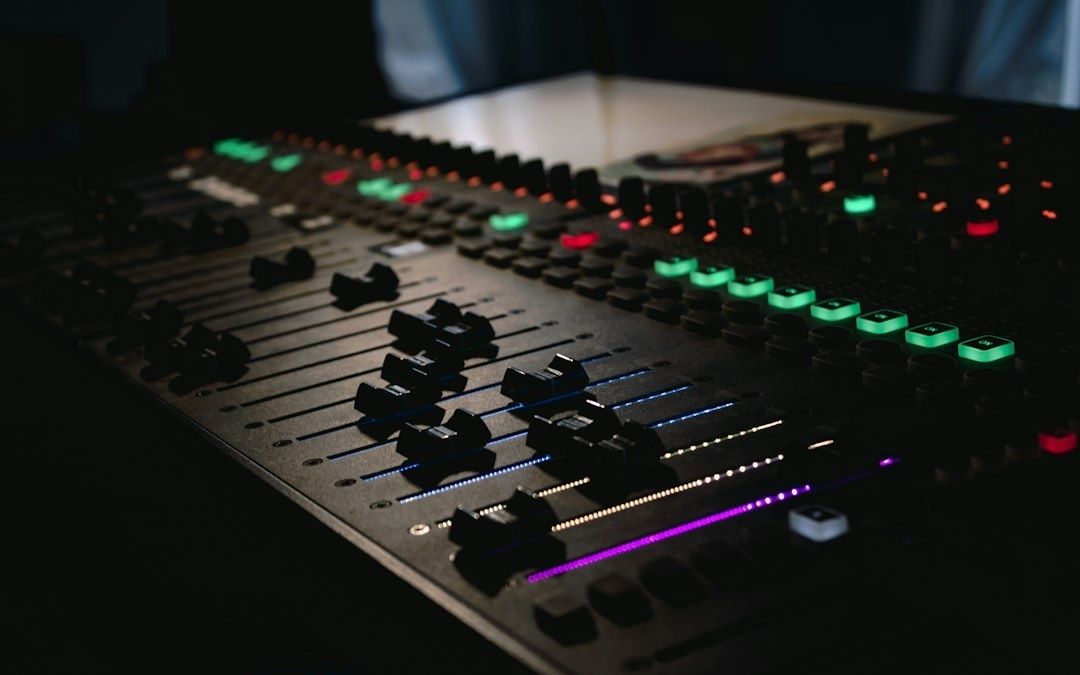
How to Bulletproof Your Event Sound: Zero-Downtime Audio Fail-Safes
Why Sound Failure Is Every Event Planner’s Worst Nightmare
Few moments expose an event faster than an unexpected silence. A first dance can lose its emotional lift, a keynote speaker can be left addressing a room that suddenly feels uncertain, and a carefully timed entrance can miss its cue entirely. For guests, the cause may be invisible, but the effect is immediate. The atmosphere stops breathing, attention scatters, and confidence in the production takes a hit.
Modern audio systems are powerful, flexible, and more interconnected than the analog rigs many engineers grew up using. A digital console, networked stagebox, wireless microphone system, playback computer, managed switch, and venue power supply can all become part of one chain. That flexibility also creates more points of failure. Professional crews therefore do not rely on luck or a single “main” device. They build parallel paths, isolate risks, test failure scenarios, and make recovery quick enough that the audience keeps feeling the rhythm. The goal is not merely good sound. It is uninterrupted energy.
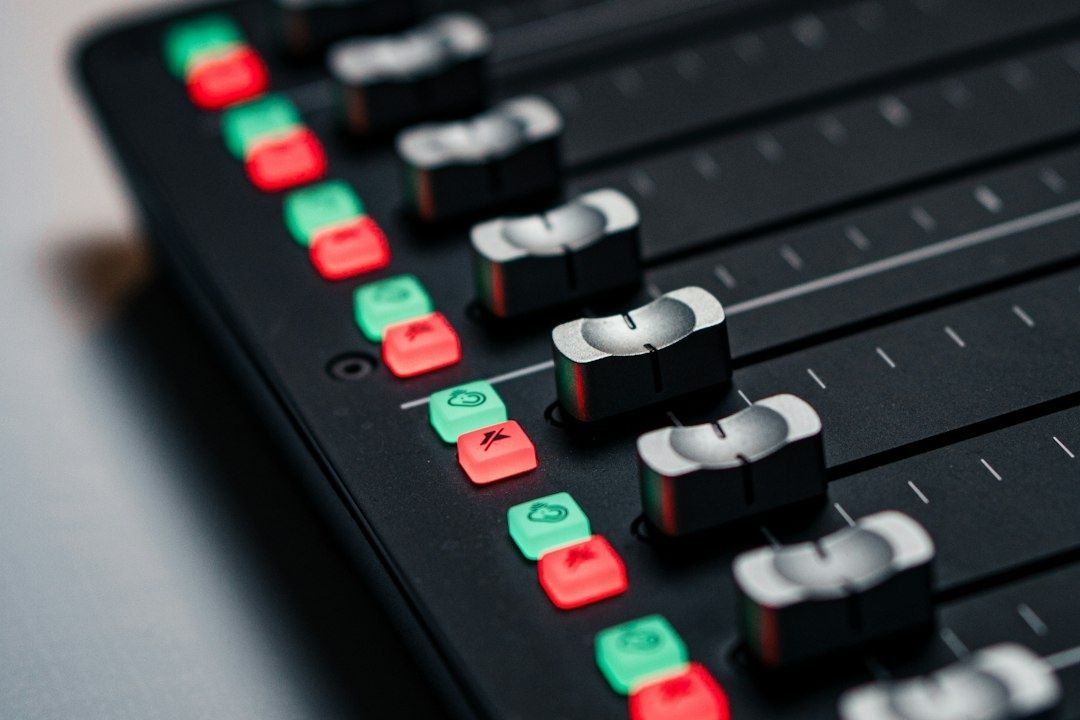
The Clean Power Baseline and Pure Sine Wave Protection
Every reliable audio system starts before the first microphone is connected. Venue power can fluctuate when lighting loads, catering equipment, HVAC systems, or other production devices switch on and off. A momentary voltage disturbance may be harmless to a passive speaker, yet sufficient to reboot a digital console, network switch, wireless receiver, or computer interface. A console that takes even a short time to restart can turn a polished transition into a highly visible interruption.
Power conditioners are useful as part of a properly designed distribution system because they can provide surge protection, filtering, voltage indication, and organized rack power. Products from specialist manufacturers such as Furman are marketed for professional audio and live-event environments, while systems such as TASCAM power-management units add sequencing and monitoring features. These tools should not be treated as magic shields, however. They cannot correct an overloaded circuit or replace competent electrical distribution. The production manager still needs to confirm circuit capacity, separate sensitive control equipment from noisy loads where possible, and label every power path clearly.
For the most sensitive digital equipment, a true online double-conversion uninterruptible power supply offers a stronger defense than a standard desktop power strip. It continuously converts incoming AC to DC and then regenerates stable AC, so connected equipment is isolated from many irregularities in the venue supply. A UPS should be sized for the actual load and configured with enough runtime to bridge a brief outage or permit an orderly shutdown. Understanding the operation of an uninterruptible power supply helps prevent digital consoles from resetting during venue voltage drops.
- Place the console, core network switches, playback interfaces, and critical wireless receivers on protected power.
- Use sequencing to avoid a damaging inrush when racks are powered up.
- Keep spare power cables, IEC leads, and correctly rated extension cables in the technical position.
- Test the UPS under realistic load before the event, not merely by switching it on.
This electrical foundation matters because a perfect audio network cannot compensate for equipment that has lost power. Clean distribution reduces the likelihood of a reboot before signal routing, RF coordination, or playback redundancy even comes into play.
Dual-Path Dante Networks and Digital Line Redundancy
Dante allows multiple channels of digital audio and device-control information to travel over gigabit Ethernet. In a redundant design, primary and secondary network circuits operate as separate paths. If the primary path fails, compatible Dante devices can continue through the secondary path without requiring an operator to repatch the show. The practical benefit is substantial: a damaged cable or failed switch does not have to become a full-room silence.
Redundancy only works when the physical network is designed correctly. Use separate switches and cable routes for primary and secondary traffic, keep critical network hardware on protected power, and document which port belongs to which circuit. Managed switches should have Energy Efficient Ethernet disabled on Dante ports. As Yamaha explains in its Dante guidance, EEE power-management behavior can interfere with clock synchronization and interrupt audio. Unmanaged switches that implement EEE should therefore be avoided in a critical Dante network.
Traditional copper multi-core snakes remain straightforward and dependable, particularly for short, uncomplicated systems. Digital networking can carry more channels over lighter infrastructure and can simplify routing, but it introduces configuration, clocking, and switch-management requirements. A daisy chain may eliminate the need for a switch, yet a break can affect every device beyond the damaged link, and delay increases as units are added. A properly separated redundant network is usually the more resilient choice for a large corporate show, concert, or wedding production.
| Risk area | Preventive action |
|---|---|
| Primary cable failure | Run a physically separate secondary cable and verify automatic recovery. |
| Switch configuration | Use suitable managed switches and disable EEE on Dante ports. |
| Clock instability | Confirm clock leadership and sample-rate settings in Dante Controller. |
| Accidental changes | Save the configuration and use Dante Device Lock after testing. |
| Fault isolation | Keep spare cables and identify switch ports so a replacement can be made quickly. |
When a switch or cable fault occurs, avoid random repatching. Check link indicators, confirm whether the failure is confined to the primary path, and inspect Dante Controller for device and clock status. If the secondary network is healthy, let the system carry the show while the fault is isolated. A short, calm diagnosis is far more effective than repeatedly disturbing a live routing structure.
Wireless Spectrum Strategy and Microphone Redundancy
Wireless microphones need the same level of planning as the PA system. A crowded ballroom may contain production intercoms, Wi-Fi access points, cameras, nearby venues, broadcast equipment, and consumer wireless devices. Frequencies that appear clear during a quiet afternoon can become unreliable once guests arrive and neighboring systems power up. Live spectrum scanning and coordinated frequency planning reduce this uncertainty, especially when many microphones must operate together.
For a high-stakes speech, a single wireless handheld is rarely enough. A hot-standby microphone should be powered, paired, tuned, and immediately available at the lectern or stage position. Where the application allows it, dual-capsule transmitter systems provide another layer of protection by giving the receiver more than one audio source within the same physical performance workflow. The backup must be rehearsed, not merely placed in a case. A presenter needs to know how to move to it, and the engineer needs a clear cue for muting or opening the alternate channel.
Antenna design also determines reliability. Use properly positioned directional or remote antennas, appropriate antenna distribution, and cable lengths that suit the system. Maintain overlapping coverage without creating unnecessary gain or overload. Sennheiser”s discussion of redundancy in WMAS technology highlights the value of distributed spectrum sensing, overlapping antenna coverage, redundant audio connections, and separate power supplies. The exact implementation depends on the wireless platform, but the principle is universal: do not allow one antenna cable, one receiver input, or one rack supply to become a single point of failure.
- Scan the venue at the actual performance positions, including the stage and audience-facing walkways.
- Coordinate frequencies across every wireless device, not only vocal microphones.
- Keep a charged, tested spare handheld within immediate reach.
- Separate antenna and power routes where practical.
- Confirm that selected frequencies are legal for the event location and service type.
Regulatory compliance is part of reliability, not paperwork after the fact. Engineers must monitor legal frequency allocations through the official wireless microphones FAQs and verify current guidance in the FCC”s Authoritative Source to avoid severe RF interference. A frequency that works in one country or city may not be permitted or practical in another, and outside broadcast transmitters can create serious problems when coordination is ignored.
The Auto-Switching Playback Architecture
Playback is often the emotional engine of an event. Entrance music, walk-up stingers, award cues, backing tracks, dinner ambience, and dance-floor transitions all depend on a computer or playback device behaving consistently. A single laptop can appear perfectly stable during soundcheck and still fail later because of a software conflict, a driver issue, an overheating condition, a background process, or a project that places unexpected demands on the system.
A robust setup uses two playback machines with synchronized sessions. Depending on the show, synchronization may use timecode, networked triggers, MIDI, or carefully rehearsed cue commands. The primary and backup should contain identical audio files, matching sample rates, equivalent cue structures, and tested output assignments. Hardware auto-switchers can route the backup output to the console within milliseconds or provide a controlled transition when the primary machine stops producing signal. The listener should hear continuity rather than a frantic search for a replacement file.
Buffer settings require balance. An extremely small audio buffer can reduce latency but leaves less room for the computer to process complex instruments, effects, automation, or video-related tasks. A large buffer may be stable but can make live interaction feel sluggish. Playback problems reported by users of VST Live and other environments show why a low CPU meter is not proof of safety. Particular plug-ins, automation density, imported MP3 files, or individual instruments can create brief dropouts even when the overall system appears lightly loaded. Use simple, locally stored WAV files for critical cues where possible, freeze or render demanding instruments, and remove unnecessary plug-ins from the show session.
- Build identical primary and backup sessions, then verify every file and cue manually.
- Run both machines at the selected sample rate and confirm stable output through the interface or switcher.
- Trigger the same entrance, stinger, and music cues on both systems during rehearsal.
- Disconnect, freeze, or reboot the primary machine and confirm that the backup takes over predictably.
- Test the switcher, monitor the output, and brief the operator on the exact recovery command.
Before doors open, deliberately create controlled failures. Stop the playback application, remove the primary network connection, disconnect its audio output, and test a long dance set rather than only a ten-second cue. The objective is not to prove that failure is impossible. It is to prove that the show remains musically coherent when failure occurs.
Deliver Flawless Energy by Preparing for the Unseen
Zero-downtime audio is built as a layered defense. Protected and monitored power keeps digital equipment alive. Dual-path networking preserves signal routing when a cable or switch fails. Coordinated RF, overlapping antenna coverage, and standby microphones keep presenters and performers connected. A synchronized playback system with hardware auto-switching protects the musical flow that shapes entrances, speeches, transitions, and the dance floor.
Redundancy also changes the psychology of performance. DJs can focus on reading the room instead of watching a single laptop. Artists can deliver with confidence. Event hosts can trust that a keynote or first dance will receive the full emotional impact planned for it. Complete a final stress test during soundcheck by verifying protected power, pulling the primary network path, changing to the backup microphone, triggering the playback failover, and confirming that every operator knows the recovery sequence. Preparation turns hidden vulnerabilities into controlled, rehearsed transitions, allowing the audience to experience nothing but momentum.
- Confirm UPS status, circuit loading, sequencing, and spare power access.
- Verify Dante primary and secondary paths, clock status, and switch configuration.
- Review RF scans, legal frequency assignments, antenna coverage, and standby microphones.
- Trigger playback failover with realistic event cues and a full-length test segment.
- Record the final routing and recovery plan where every key crew member can reach it.
By Magnus
- 29, Sep, 2026
- 0 Comments