
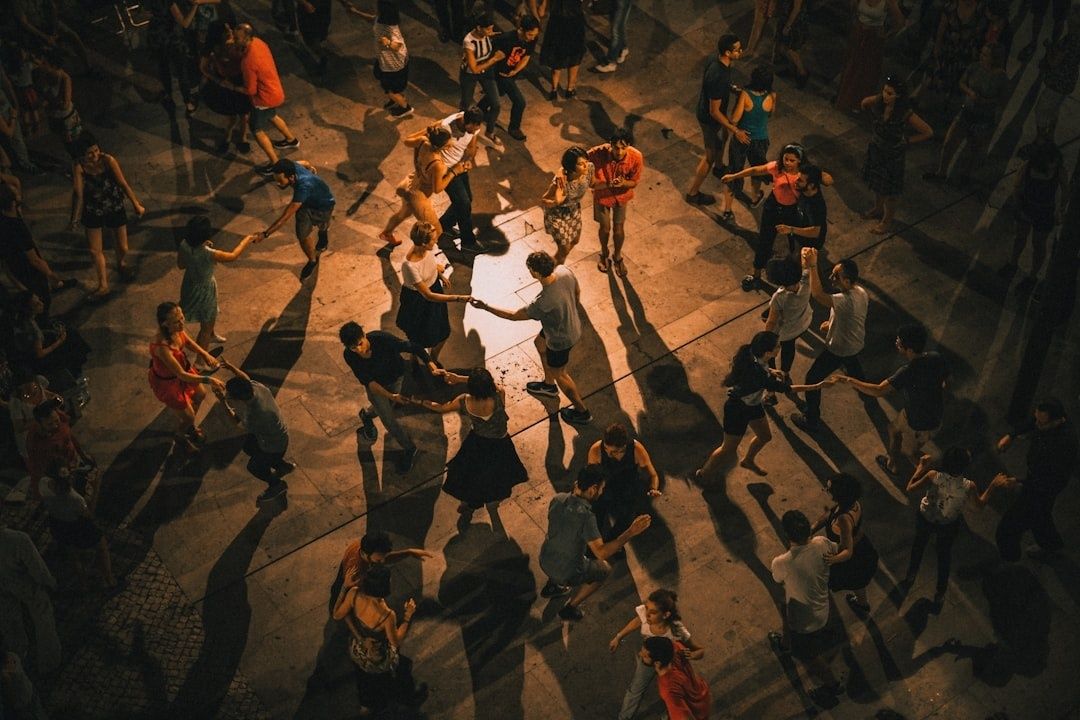
How to Pack the Dance Floor Across Generations: Seamless Pairing Secrets
Why the Generational Music Divide Empties the Floor
The fastest way to empty a mixed-age dance floor is to treat the evening as a sequence of sealed compartments: an oldies hour, a modern chart block, perhaps a brief rock segment, then a late-night run of club records. Each block may contain excellent songs, yet the hard boundaries create a stop-start experience. Guests who feel that the music has moved away from them do not wait patiently for their decade to return. They head to the bar, find a quieter corner, or leave the floor altogether.
A stronger approach sees the event from two positions at once. On the floor, the DJ tracks immediate signals such as movement, singing, partner changes, and the speed at which people respond to the next record. From the balcony, the DJ considers the wider social pattern: who is represented, which groups are mixing, and whether one generation is being asked to surrender the room to another. This broader viewpoint, explored through the Sociological Perspective: The Dance Floor and the Balcony, helps turn demographic differences into programming information rather than barriers. The goal is not to make every song appeal equally to everyone, but to create a continuous invitation to participate.

The Pitfalls of Segregated Playlists and Age Segmentation
Hard shifts between eras often produce a visible migration. A run of familiar 1970s disco may bring older guests forward, but if it is followed by an abrupt sequence of unfamiliar contemporary tracks, those dancers can disappear within two minutes. The reverse is just as damaging. A young crowd may respond to current pop or hip-hop, then retreat when the set suddenly becomes a museum of songs chosen only for older relatives. The issue is not that either generation dislikes the other”s music. It is that the transition signals exclusion.
Every crowd needs a mixture of safe zone records and edge selections. Safe zone songs are instantly recognizable, easy to sing, and socially useful. They create confidence for guests who are deciding whether to dance. Edge selections add personality, discovery, and credibility, but too many in succession make the room work too hard. A productive opening establishes an inclusive sonic baseline through familiar soul, funk, pop, rock, and modern tracks with strong melodic or rhythmic identity. Guidance for planning across age groups also emphasizes recognizable bridge songs, flexible timing, and real-time crowd reading rather than a rigid timetable, as outlined in Wedding Music for Different Ages | Multi-Generation Guide 2025.
Program the first thirty minutes of dancing as a social contract. The room should learn that the set will respect several generations without turning them into opposing teams. Strong communal records such as “Dancing Queen,” “Valerie,” “Mr. Brightside,” “Don”t Stop Me Now,” or “Sweet Caroline” can serve that purpose when used with care and not treated as automatic solutions. Keep an eye on venue size, the age balance, cultural context, and whether guests are already warmed up by a live band or formal dances. Use the following principles to protect momentum:
- Introduce broad recognition before testing the room with specialist choices.
- Place an edge track between two dependable crowd records.
- Use vocal hooks, handclaps, and familiar choruses to make transitions feel communal.
- Avoid labeling blocks by age, because the audience should feel invited rather than categorized.
- Let visible response determine the next move instead of defending a prewritten sequence.
Harmonic Mixing Techniques That Bridge Half a Century
Harmonic mixing can make a vintage groove and a modern record feel related even when their production styles are decades apart. The Camelot wheel translates musical keys into a practical system of compatible numbers and letters. A DJ can move between the same key, an adjacent key, or a relative major and minor pairing while preserving a sense of tonal stability. The technique is not a substitute for programming, but it removes one of the most distracting problems in cross-era mixing: a vocal or bassline that suddenly collides with the outgoing track.
Start by identifying the key of both records in reliable DJ software, then confirm the result by ear, especially with older recordings, live performances, edits, and samples. If the outgoing disco track is marked 8A, suitable options include another 8A record, a neighboring 7A or 9A record, or the compatible 8B relative major. Build the transition over a clean phrase, generally eight, sixteen, or thirty-two bars, and introduce the new melodic material only after the outgoing vocal has reached a natural point of release. A concise overview of the theory and terminology appears in this guide to harmonic mixing.
Energy still matters more than a perfect key match. A harmonically compatible ballad can flatten a room if its arrangement removes too much rhythmic drive, while a less exact match may work when the incoming record arrives after a vocal ending, drum fill, or deliberate cut. Relative major and minor transitions are particularly useful: a bright disco chorus can lead into a darker modern house or hip-hop record while retaining a shared tonal center. The following chart offers a starting framework, not a fixed prescription.
| Outgoing material | Bridge technique | Incoming direction |
|---|---|---|
| 1970s disco at 108 BPM | Match key, loop the percussion, and extend the four-on-the-floor phrase | Modern pop or dance record at 108 to 112 BPM |
| 1980s synth-pop in a minor key | Use the relative major or a short instrumental breakdown | Contemporary melodic pop with a brighter chorus |
| Classic soul with a strong vocal ending | Cut or echo the final phrase, then introduce a familiar modern drum pattern | Hip-hop, R&B, or pop with a related bass movement |
| 2000s dance anthem at high energy | Reduce to a half-time vocal or percussion loop | Vintage funk or disco hook restored at a manageable tempo |
Sonic DNA and Sample Heritage as Your Bridge
Shared musical ancestry is one of the most powerful tools in a multi-generational set. Older guests may recognize the original funk, soul, or disco record, while younger guests know the later track that sampled its break, bassline, vocal phrase, or drum texture. That recognition can happen almost simultaneously across the room. Instead of announcing a history lesson, the DJ lets the audience experience the connection through sound.
Classic funk is especially useful because its rhythmic identity survives translation. A bass figure, a clipped guitar part, or a handclap pattern can move from a 1970s original into modern hip-hop, pop, dance, and R&B without losing its physical impact. A Chaka Khan record, for example, can connect to a contemporary chart selection through a related bass movement, a shared disco pulse, or a recognizable vocal attitude. The transition may be a full blend, a short instrumental loop, or a dramatic “bait and switch” in which the audience expects the original chorus before the modern record takes over.
Archival research can sharpen these choices. The Library of Congress project Citizen DJ is an Authoritative Source that demonstrates how public audio collections can inspire responsible creative exploration, although any performance use must respect the licensing status of the material. Practical bridge-building can follow three routes:
- Play the original break, then reveal the modern record that carries its rhythmic fingerprint.
- Use an instrumental or licensed edit to place an older vocal hook over a contemporary beat.
- Pair songs by arrangement rather than artist, matching bass movement, drum feel, call-and-response, or chorus shape.
Do not overload the room with cleverness. A mashup should feel inevitable within the first few seconds, not like an audio puzzle that requires explanation. Test every combination at realistic sound levels, check vocal clarity, and make sure the low end remains controlled. The best sample-based bridge gives older guests a moment of recognition and younger guests a fresh source of energy.
Rhythmic Ramps and Pacing Routines That Keep the Room United
Tempo is a useful guide, but it is not a cage. A 105 BPM funk record can feel more urgent than a poorly chosen 124 BPM dance track, and a half-time hip-hop section can connect two records with very different numerical tempos. The DJ”s task is to manage perceived movement, not simply climb a BPM ladder. Smooth pacing gives guests time to adapt while preserving the impression that the party is always progressing.
- Establish the baseline. Begin around 100 to 112 BPM with funk, disco, soul, accessible pop, or groove-led R&B. Choose records with clear drums and strong choruses so different age groups can enter without needing specialist knowledge.
- Raise energy through bridges. Increase tempo in small steps, or use a half-time vocal, percussion loop, drum build, or breakdown when a larger change is necessary. Phrase-based mixing keeps the shift musical even when the genres differ.
- Deploy the bait and switch. Place a familiar vintage vocal hook over a high-energy modern beat, or tease a classic chorus before dropping into a current anthem. Recognition creates the invitation; the modern production delivers the lift.
- Protect the room with breathers. Every peak needs contrast. Choose emotionally strong mid-tempo records, group singalongs, or warm throwbacks that allow guests to reset without abandoning the dance floor.
Watch what happens after each decision. A full floor is not automatically a successful floor if guests look uncomfortable, dance without commitment, or stop responding to changes. Conversely, a smaller floor may contain the most engaged dancers and signal that the set can move toward a more adventurous direction. Event mix examples show why flexibility matters across weddings and celebrations with different crowd profiles, energy levels, and genre expectations. Programming should therefore remain adaptable, with a working collection large enough to offer several next moves rather than forcing a single planned route.
When a live band hands over to a DJ, preserve at least one recognizable element from the band”s final moment: tempo, vocal mood, groove, or instrument texture. If the band ends with a classic rock anthem, do not erase that emotional peak with an unrelated intro. Follow with a modern record that shares its chant, drum drive, or guitar energy, then widen the palette gradually. The same principle applies after dinner, speeches, or cultural dances. The floor should feel like it is opening outward, not restarting from zero.
Transform Your Next Set Into a Timeless Celebration
A multi-generational dance floor lasts when the set is built as a conversation rather than a contest. Harmonic compatibility can make contrasting keys sit together, rhythmic ramps can control perceived energy, and shared sample heritage can reveal a connection between a classic favorite and a modern chart record. These techniques reduce the need for rigid old-versus-new programming and give every guest a reason to remain part of the experience.
Prepare intelligently, but leave room for the room itself to speak. Mark reliable safe zone records, identify several bridge songs for each tempo range, and prepare alternate routes through disco, soul, rock, pop, hip-hop, R&B, and current dance music. Then observe, adapt, and let recognition guide discovery. When nostalgia and contemporary heat are woven into one continuous flow, the dance floor stops reflecting a generational divide and starts reflecting what every successful celebration has in common: rhythm, participation, and the feeling that the next song belongs to everyone.