
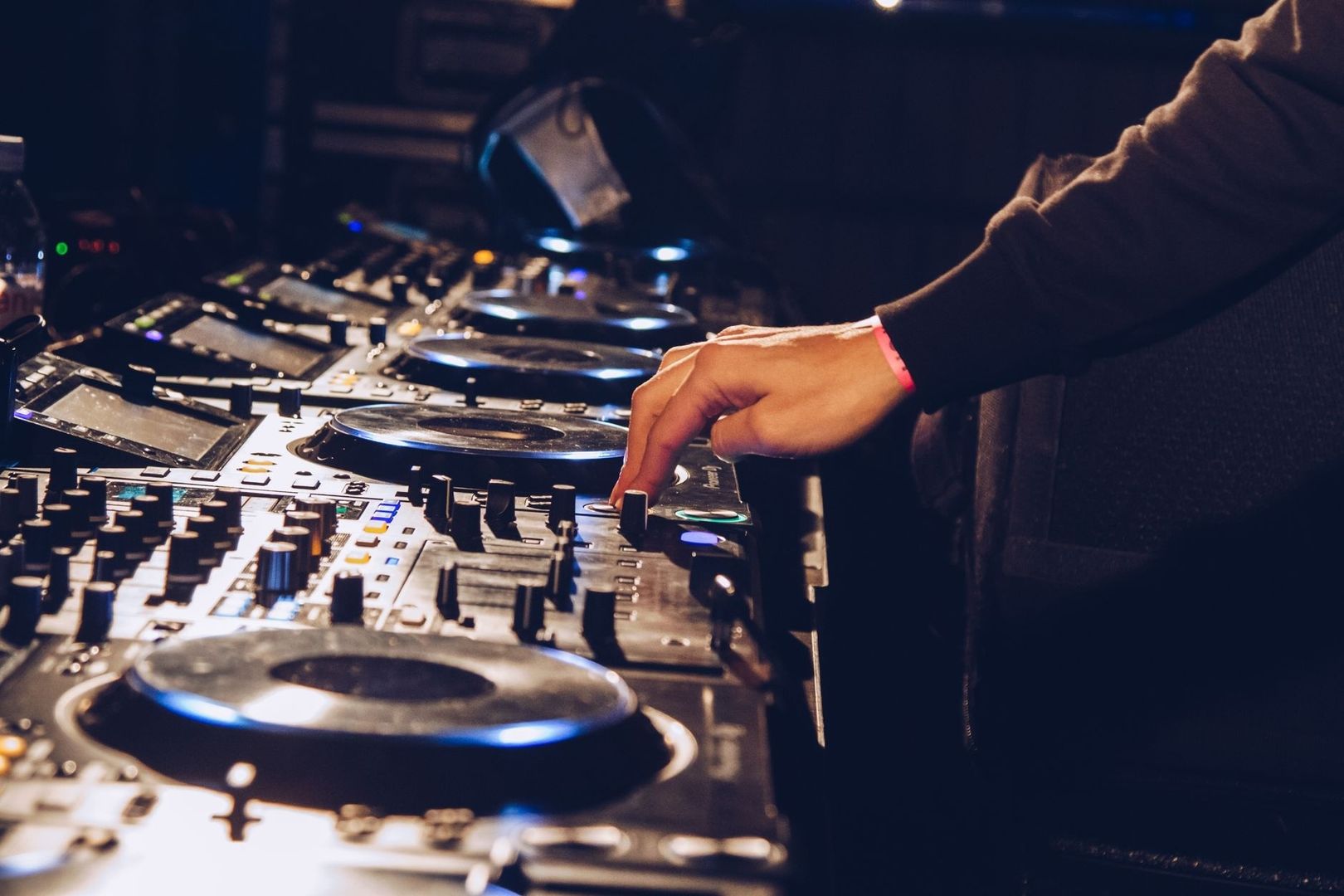
The Four-Hour Arc: How to Build Dance Floor Energy Without Burning Out Your Crowd
Why Redlining the Dance Floor Backfires
A four-hour dance event is not a single peak stretched across an evening. It is a narrative with an opening invitation, a rising middle, moments of release, and a finale that feels earned. The most common mistake is to treat intensity as a fixed setting, keeping the BPM high, the percussion dense, and the volume near its limit from the first serious track until the last call. That approach may create an immediate reaction, but it gives the room nowhere meaningful to go.
Relentless pressure also works against the physical reality of a crowd. Guests need to talk, drink water, visit the bar, greet friends, and recover their legs without feeling that they have missed the entire event. When every transition demands maximum exertion, dancers become selective about staying on the floor, and early departures can begin before the strongest part of the night arrives. A better framework is a three-act arc: establish trust, build momentum through waves, then deliver an emotional payoff. For professionals planning a memorable DJ experience, pacing is not a restraint on excitement. It is the structure that makes excitement last.
Act One Setting the Baseline and Welcoming the Room
The first hour should make participation feel easy. Guests are still reading the room, locating friends, ordering drinks, and deciding whether the dance floor belongs to them. Music that is too aggressive can create a social barrier, particularly at weddings and mixed-age events where the audience may not share one obvious genre or tempo preference. Begin with a subtle groove that has a clear pulse, attractive vocals, or a memorable rhythmic figure, but avoid demanding full-body movement before the room is ready.
Mid-tempo selections are valuable because they perform several jobs at once. They give early dancers a comfortable foundation, keep bar traffic active, and allow conversations to continue around the edge of the floor. Rhythmic hooks can prime muscle memory without exhausting anyone: a recognizable bass pattern, a lightly syncopated percussion loop, or a chorus that invites small movements rather than a full singalong. The objective is to create a room that feels musically alive while preserving plenty of physical and emotional headroom.
Track selection should be supported by disciplined technical control. The discussion of energy mixing from DJ energy and dynamics highlights that energy is shaped not only by BPM, but also by mix density, overlap, track structure, and harmonic movement. During the opening, fewer tracks per hour and longer, more breathable transitions can sound more confident than constant cutting. Apparent loudness also requires attention. Different decades, file formats, and production styles can produce uneven perceived volume, so use your ears, mixer gain, and meters rather than trusting automatic normalization alone.
- Choose a tempo range that supports conversation and relaxed movement.
- Introduce recurring rhythmic motifs so the room gradually develops a shared pulse.
- Keep transitions spacious enough for guests to recognize each track and settle into it.
- Watch the edges of the floor, not only the center, because hesitant guests often reveal the next opportunity for growth.
Act Two Constructing the Ascent Through Dynamic Waves
Hours two and three are where an event changes from a collection of individuals into a unified crowd. By this point, guests understand the musical language, early dancers have established social permission, and the DJ can begin connecting familiar records with more propulsive material. The ascent should not be a straight line. Think in waves: a stronger run of tracks, a short release, another lift, and then a more substantial peak. Each wave gives the crowd a reason to re-engage instead of forcing continuous exertion.
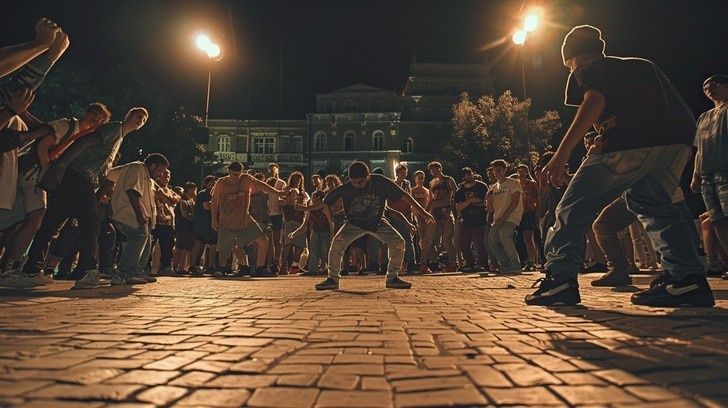
Mix density is one of the clearest tools for shaping those waves. A set that moves through 13 to 15 tracks per hour will generally feel faster and more active than one using 9 or 10 tracks, assuming comparable track lengths and arrangements. Increased overlap can also raise perceived momentum, while longer blends create continuity and depth. Neither approach is automatically superior. Dense mixing is useful when the room is ready for rapid information, but a familiar anthem may need space to breathe. Harmonic mixing can produce smooth, reassuring transitions, while a deliberate key contrast can make a bass change or tonal shift feel especially dramatic.
Tempo adjustments should be smooth enough that the audience experiences a change in mood rather than notices a technical maneuver. A looped percussion section, a breakdown, or a vocal phrase can provide a controlled bridge into a faster track. Small increases, often spread across several transitions, are usually more natural than a sudden jump. Monitor the relationship between BPM, low-frequency pressure, and physical response. A louder or denser mix is not necessarily a stronger mix, especially when compression reduces contrast and leaves dancers with no moments of relief.
| Event phase | Primary objective | Useful musical tools | Room signal to watch |
|---|---|---|---|
| 0 to 60 minutes | Welcome and establish trust | Mid-tempo grooves, open transitions, moderate density | Guests begin edging toward the floor and staying longer |
| 60 to 120 minutes | Convert interest into participation | Recognizable hooks, measured tempo lifts, selective layering | More unified movement and fewer empty spaces |
| 120 to 180 minutes | Build sustained momentum through waves | Denser mixes, stronger drops, vocal and harmonic contrast | Crowd responds quickly but still has visible recovery capacity |
| 180 to 220 minutes | Peak and create emotional release | Anthems, high-impact transitions, carefully timed reprises | Guests sing, gesture, and remain engaged through transitions |
| 220 to 240 minutes | Land the evening with satisfaction | Final favorites, emotional closer, controlled reduction | Energy feels complete rather than depleted |
The Anatomy of an Effective Floor Breather
A floor breather is not a failure of momentum. It is a deliberate reset that protects the final act. Physically, dancing for extended periods raises heat, thirst, and fatigue, while crowded venues can intensify those pressures. The CDC guidance on mass gatherings emphasizes the importance of crowd conditions, duration, temperature, hydration, sanitation, and access to safe facilities. Event producers should treat those practical factors as part of musical planning, not as separate concerns handled only by venue staff.
Musically, the strongest breather preserves anticipation while reducing physical demand. Pull back the kick pattern, shorten the low-end weight, or move into a melodic vocal section with a clearly implied return. A familiar singalong can keep emotional engagement high even when percussion is sparse. A lower-density track with a strong chord progression may also allow guests to talk, hydrate, and reset without making the room feel abandoned. The key is to reduce pressure, not meaning.
- Identify the warning signs, including dancers leaving in clusters, reduced vocal response, slower movement, and a floor that appears crowded only near the edges.
- Introduce a track with melodic tension and fewer percussive layers, keeping enough pulse for continuity.
- Allow space for hydration, bar visits, and social reconnection instead of rushing into the next drop.
- Rebuild gradually with a recognizable hook, a stronger bass entrance, or a vocal cue that signals the next chapter.
Audience fatigue follows a similar pattern in many forms of participation: when people receive one urgent demand after another, the instinctive response is often withdrawal rather than greater commitment. Guidance on preventing audience fatigue recommends spacing demands, varying formats, and making participation enjoyable instead of simply increasing pressure. Applied to a dance floor, that means varying texture, intensity, and emotional framing. A breather should feel like hospitality. It tells guests that the event is designed around their experience, not the DJ’s need to prove constant technical intensity.
Act Three Delivering the Payoff and Landing the Finale
The final act is where preparation becomes payoff. Once the room has recovered and the crowd is ready, peak-hour material can arrive with real force. Anthem-level records work best when they connect to something already established: a chorus introduced earlier, a familiar genre thread, a vocal associated with the event, or a rhythmic idea that has gradually grown more prominent. High-energy transitions should feel decisive, but clarity matters more than showing off. A clean, well-timed entrance will usually create a bigger reaction than a complicated blend that obscures the song guests came to hear.
A memorable climax is emotional as well as physical. The strongest final sequence may include a euphoric vocal, a collective singalong, a dramatic instrumental release, or a track that gives the audience a shared sense of occasion. Avoid spending every major anthem too early in the final hour. Reserve at least one unmistakable centerpiece for the point when the room is most receptive, then use the remaining material to reinforce the memory rather than compete with it.
- Place the biggest shared record after the crowd has demonstrated readiness, not simply because the clock says peak time.
- Protect the intelligibility of vocals and hooks by managing gain, low-end buildup, and excessive effects.
- Use transitions that release tension clearly, allowing the audience to recognize and celebrate the moment.
- Keep a final emotional signature in reserve, whether it is a wedding favorite, a communal anthem, or a perfectly chosen closer.
The last 20 minutes deserve their own pacing plan. An abrupt power cut or unplanned fade can make a successful night feel unfinished, while another uninterrupted barrage of maximum-intensity tracks can leave guests exhausted rather than fulfilled. Begin signaling completion through selection and phrasing, even if the energy remains high. A final anthem can provide the peak, followed by a track with warmth, nostalgia, or lyrical closure. When the last record ends, guests should feel that the story reached its natural destination, not that the sound system simply ran out of time.
Master the Narrative Arc for Unforgettable Nights
The four-hour dance event works when each act has a distinct purpose. Act One welcomes the room and establishes a pulse without demanding too much. Act Two turns that pulse into collective movement through dynamic waves, controlled density, and gradual tempo development. Act Three delivers the emotional release, protects the strongest records, and lands the finale with enough shape to feel complete.
Intentional pacing transforms an ordinary party into a shared cultural memory because guests remember contrast: the first invitation onto the floor, the moment strangers began moving together, the breath before the biggest drop, and the final chorus everyone knew. Read the room continuously, respect crowd stamina, and treat silence, space, and restraint as active parts of the performance. The goal is not to keep the dance floor at maximum intensity for four hours. The goal is to make every return to maximum intensity feel irresistible.
By Magnus
- 8, Sep, 2026
- 0 Comments